Showing posts with label rabbit. Show all posts
Tuesday, February 26, 2013
Thursday, October 28, 2010
Thursday, September 23, 2010
Monday, September 6, 2010
Sunday, August 8, 2010
Wednesday, July 28, 2010
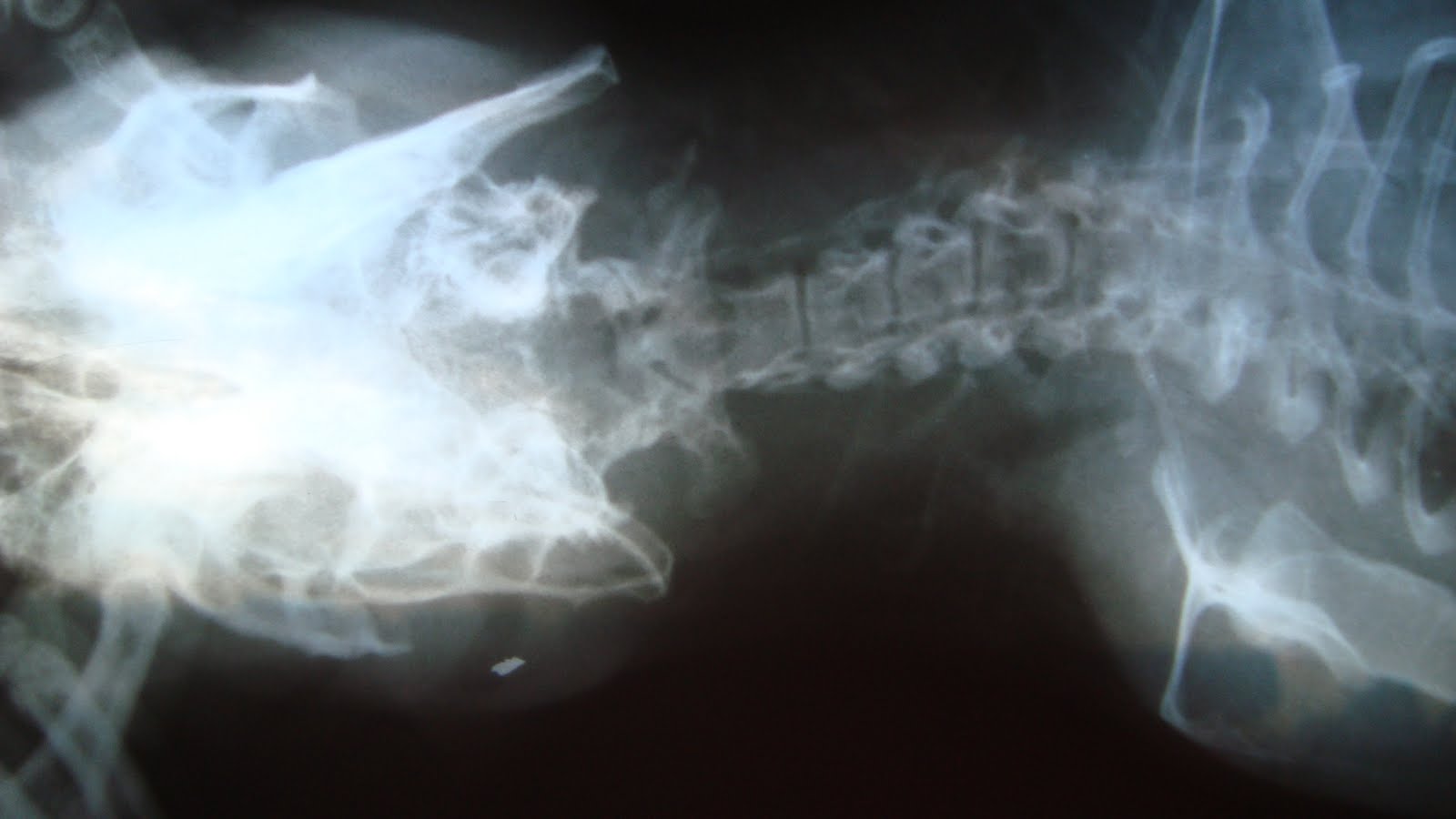
FRACTURE - RABBIT'S JAW
Poor rabbit got some injury and was not able to eat anything. Radiograph was done to find out the problem and his jaw was found fractured. Rest was best in this case. With time it will heal.
Wednesday, June 2, 2010
HOW TO GIVE TABLETS TO RABBIT
Offer the tablet to your rabbit in the palm of your hand. Some take the pill easily this way, especially if the medication does not have a bad taste.
OR
Hide the whole tablet inside a piece of your rabbit's favorite food. A good food to use for hiding a pill is banana or apple.
OR
Grind up the tablet and mix the ground pill into apple sauce, banana, yogurt, or some vegetable. Put the food in a small dish and place it on the floor for your bunny to eat.
OR
Dissolve the tablet in water or fruit juice and then administer it to the rabbit using a syringe.
OR
Hide the whole tablet inside a piece of your rabbit's favorite food. A good food to use for hiding a pill is banana or apple.
OR
Grind up the tablet and mix the ground pill into apple sauce, banana, yogurt, or some vegetable. Put the food in a small dish and place it on the floor for your bunny to eat.
OR
Dissolve the tablet in water or fruit juice and then administer it to the rabbit using a syringe.
Saturday, April 3, 2010
Sunday, March 28, 2010
FUNGAL INFECTION IN RABBIT
Fungal infection is caused by continuous wetting of fur. Check the neck area and chin for possible abscesses which can result from excessive scratching of the affected area.
Any slimy fur should be cut away using rounded-tipped grooming or bandage scissors. If the skin is raw, Betadine ointment is good to use as the iodine in it will kill the fungus. Iodine or prescribed antifungal cream can be applied over affected areas to stop the spread of a fungal infection, especially on the legs and between the toes.
Treatment is best done with the rabbit held on its back in a reclining position. Be careful when cutting fur as the skin is so thin and supple that it is very easy to cut it in error.
Any slimy fur should be cut away using rounded-tipped grooming or bandage scissors. If the skin is raw, Betadine ointment is good to use as the iodine in it will kill the fungus. Iodine or prescribed antifungal cream can be applied over affected areas to stop the spread of a fungal infection, especially on the legs and between the toes.
Treatment is best done with the rabbit held on its back in a reclining position. Be careful when cutting fur as the skin is so thin and supple that it is very easy to cut it in error.
Monday, March 22, 2010
WORMS IN RABBIT
PINWORMS - Pinworms are small and white worms, about half the size of a grain of rice. These worms can be seen in rabbit's vent area. Take your rabbit to the vet and also take some of his poo for examination to make sure. This type of worm cannot be spread to humans. The rabbits can get pinworms from contaminated water or food. Change the water in the water bottle daily, and make sure not to feed food that is not fresh. However, even rabbits that get clean water and fresh food all the time can sometimes get pinworms for no obvious reason.
so, deworming is must for bunnies to prevent further problems.
Wednesday, March 17, 2010
RABBIT - CAUSES OF RED COLOURED URINE

In rabbit's the normal colour of urine is yellow but in sick animals it may be red, brown, or orange and this condition is simply called "red urine".
Causes of red urine
1. Plant pigments: The red color of urine can be due to porphyrins present in plants. Sometimes diets with large amounts of plants high in beta-carotene, such as carrots and spinach, can cause the reddish discoloration. Generally, the changes in urine color caused by diet are intermittent and only last 2-3 days.
2. Antibiotics: The administration of some antibiotics may increase the levels of pigments in the urine.
3. Stress: Stress or even a change of season may result in reddish discolored urine.
1. Plant pigments: The red color of urine can be due to porphyrins present in plants. Sometimes diets with large amounts of plants high in beta-carotene, such as carrots and spinach, can cause the reddish discoloration. Generally, the changes in urine color caused by diet are intermittent and only last 2-3 days.
2. Antibiotics: The administration of some antibiotics may increase the levels of pigments in the urine.
3. Stress: Stress or even a change of season may result in reddish discolored urine.
4. Dehydration: Dehydration will concentrate the urine to give it different colour.
5. Blood: If the red coloration is due to hematuria, it is a sign of disease in the urinary tract i.e. Kidney or bladder infection, Kidney or bladder stones, Kidney or bladder cancer
6. Blood in secretions from the uterus or vagina normally appear as a bloody discharge on the vulva, or as several bloody drops before or after urination.
5. Blood: If the red coloration is due to hematuria, it is a sign of disease in the urinary tract i.e. Kidney or bladder infection, Kidney or bladder stones, Kidney or bladder cancer
6. Blood in secretions from the uterus or vagina normally appear as a bloody discharge on the vulva, or as several bloody drops before or after urination.
7. Bilirubin and urobilinogen: The discoloration of the urine may be due to the presence of chemicals called bilirubin and urobilinogen.
Saturday, January 16, 2010
Wednesday, November 25, 2009
FEEDING YOUR RABBIT

The digestive system of a rabbit is very susceptible to serious upsets if the diet is inappropriate. The amount of pellets should be restricted, especially in overweight rabbits, but any reduction in pellets should be made up with a variety of fresh vegetables and unlimited access to hay.
Hay
Hay should be available at all times. Adding fresh hay a couple of times a day may help, and as the amount of pellets is reduced the rabbit will likely become hungry enough to eat the hay.
Vegetables
Vegetable should make up a large portion of the diet. Depending on the size of the rabbit, 2-4 cups of fresh veggies should be given per day. A variety must be fed daily to ensure a balanced diet. Suggested vegetable include carrots, carrot tops, broccoli, collard greens, mustard greens, dandelion greens, turnip greens, kale and spinach.
Vegetables should be introduced to bunnies around 12 weeks of age, in small quantities and one at a time. As more vegetable are added watch for diarrhea and discontinue the most recently added vegetable if this occurs. Over time, the amount of vegetables fed is increased, and the amount of pellets decreased, so that by 1 year of age the adult feeding recommendations are followed.
Pellets
Pellets are basically designed for commercial rabbit production, and are quite high in calories. As a result, house rabbits fed unlimited pellets may end up with obesity and related health problems, as well as an excess of other nutrients. Pellets do have a place in rabbit nutrition, as they are rich and balanced in nutrients.
Treats
Treats sold in pet stores marketed for rabbits are generally unnecessary and in some cases could cause digestive problems due to their high carbohydrate or sugar content. Instead of food treats, consider offering twigs from apple or willow trees
Saturday, October 3, 2009
Rabbit - neutering is necessary

Surgery can be as safe on rabbits as on any animal. Unfortunately, the majority of veterinarians aren't experienced with safe techniques.
Females can be spayed as soon as they sexually mature, usually around 4 months of age. Males can be neutered as soon as the testicles descend, usually around 3-1/2 months of age.
The risk of reproductive cancers for an unspayed female rabbit stands at is virtually eliminated by spaying your female rabbit. Your neutered male rabbit will live longer as well, given that he won't be tempted to fight with other animals due to his sexual aggression.
Females can be spayed as soon as they sexually mature, usually around 4 months of age. Males can be neutered as soon as the testicles descend, usually around 3-1/2 months of age.
The risk of reproductive cancers for an unspayed female rabbit stands at is virtually eliminated by spaying your female rabbit. Your neutered male rabbit will live longer as well, given that he won't be tempted to fight with other animals due to his sexual aggression.
Saturday, September 26, 2009
social interaction between guinea pig, pigeon and rabbit
Subscribe to:
Posts (Atom)